
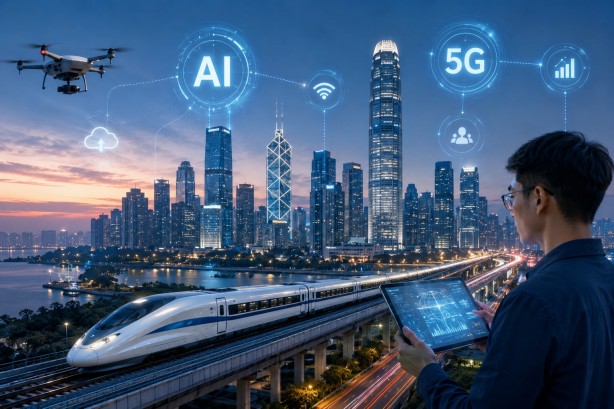
China is making significant strides in expanding its digital economy, enhancing the integration of artificial intelligence, digital infrastructure, and smart technologies across various sectors. By 2025, this ambitious growth propelled the digital economy to a remarkable valuation of 49 trillion yuan ($7.22 trillion), which constituted roughly 35% of the nation’s Gross Domestic Product (GDP). Notably, core digital industries alone contributed over 10.5% to the GDP, underscoring the sector’s critical role in the nation’s economic framework.
Under the strategic guidance of its 15th Five-Year Plan, spanning from 2026 to 2030, China is charting a course to further augment AI applications and bolster data security measures. This plan also emphasizes the enhancement of digital governance and the fostering of international collaborations to solidify its position as a global leader in digital advancement.
Cities like Beijing are at the forefront of this digital transformation, showcasing innovative applications of technology that are reshaping public services and driving economic growth. Initiatives such as internet hospitals and AI-powered traffic management systems are being implemented to optimize urban living. Additionally, shared medical imaging platforms and smart utility networks are being developed to enhance the efficiency and effectiveness of public services.
The adoption of these digital technologies is not only pivotal in boosting economic output but also in improving the quality of everyday life for citizens. As China continues to advance its digital strategy, the integration of these technologies promises to deliver substantial benefits across a wide array of industries and public sectors.