
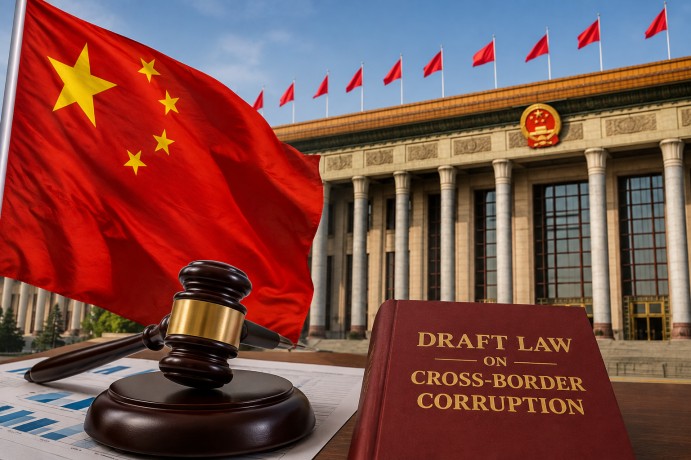
China’s top legislative body is poised to evaluate a draft law designed to tackle cross-border corruption during the forthcoming session of the National People’s Congress Standing Committee, scheduled from August 25 to 28. This proposed legislation aims to bolster China’s anti-corruption measures and enhance international collaboration in apprehending suspected corrupt officials and fugitives who have fled abroad. The introduction of this law is among the priority legislative projects for the current term of the NPC and is considered a key legislative focus for 2026.
The initiative reflects China’s heightened efforts to recover and bring back individuals accused of corruption who have sought refuge overseas. According to the nation’s leading anti-corruption agency, China successfully repatriated 963 corrupt fugitives in 2025, underscoring the country’s commitment to addressing this issue on a global scale. The draft law seeks to further solidify these efforts by providing a legal framework for international cooperation in pursuing and extraditing suspects.
In addition to the anti-corruption law, the session will also see lawmakers reviewing a range of other legislative proposals and amendments. These include draft laws related to healthcare security, which aim to ensure comprehensive medical coverage for the population, and farmland protection, emphasizing the preservation of China’s agricultural resources. The agenda also covers significant areas such as agriculture development, national defense mobilization, banking regulation, water management, and road traffic safety, reflecting the broad scope of issues being addressed.
The inclusion of these topics highlights the diverse legislative priorities of the National People’s Congress, as it seeks to address both domestic and international challenges. The focus on such a wide array of issues indicates a comprehensive approach to governance, targeting improvements in public welfare, economic stability, and national security. The upcoming session promises to be a critical moment for legislative action in China, as the country continues to refine its legal and regulatory frameworks in response to evolving needs.