
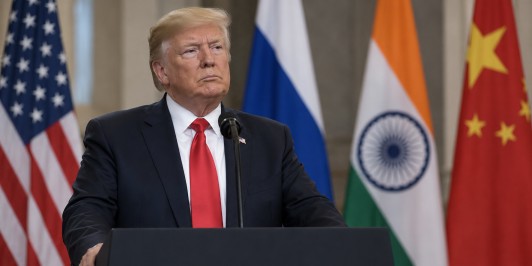
In a strategic move to increase pressure on Moscow, U.S. President Donald Trump has announced potential new tariffs on countries purchasing Russian energy, leveraging powers granted by a recently enacted sanctions law. The Lindsey O. Graham Sanctioning Russia and Iran Act of 2026, signed into law last week, authorizes the president to impose tariffs of up to 100% on nations buying Russian oil and natural gas, with India and China among the primary buyers potentially affected.
Addressing the United Nations General Assembly, President Trump emphasized the significance of this legislative tool in compelling Russia to seek an end to the ongoing conflict in Ukraine. He stated his readiness to employ these tariff measures if deemed necessary to support diplomatic efforts aimed at resolving the war. The law also introduces sanctions against Russian officials and entities, particularly targeting sectors believed to be circumventing existing sanctions.
The legislation’s potential impact on India and China, two major consumers of Russian energy, remains contingent on future decisions by the U.S. administration. The law does not automatically enforce tariffs on these nations but grants the president the discretion to determine the specifics of any tariff imposition.
This development comes amid ongoing U.S. efforts to bring Russia to the negotiating table regarding the Ukraine conflict. Ukrainian President Volodymyr Zelenskyy has expressed support for the new sanctions, indicating his openness to further discussions aimed at achieving peace.
The Trump administration’s latest move highlights its broader strategy of employing economic measures to influence geopolitical outcomes, with the potential tariff authority serving as a critical tool in its diplomatic arsenal. The international community will be watching closely as these dynamics unfold, particularly how India and China respond to potential changes in U.S. trade policy.