
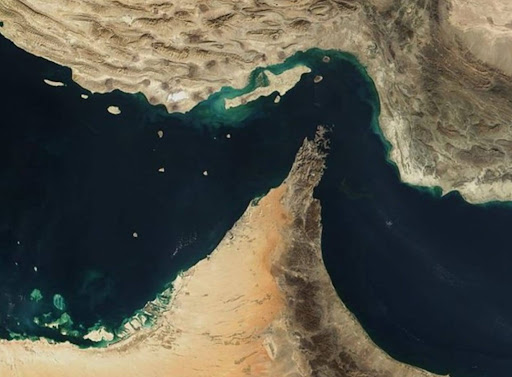
The Strait of Hormuz — at its narrowest point just 21 miles wide — has become the fulcrum of global power, concentrating the world’s attention on a single geographic point where one country’s decision to blockade a narrow shipping lane has produced the largest oil supply disruption in history, challenged the world’s most powerful military alliance, and strained the global energy system to its limits. President Trump’s call for a naval coalition to reopen the waterway has revealed both the centrality of the strait to international affairs and the remarkable difficulty of assembling a credible military response to its closure.
Iran’s blockade began at the end of February as retaliation for US-Israeli airstrikes, shutting off a passage through which one-fifth of global oil exports ordinarily flow. Tehran has attacked sixteen tankers and declared vessels bound for American or allied ports to be legitimate military targets. The threat of mines adds a long-term dimension to the crisis. The economic consequences have been immediate and severe — global oil prices have surged, supply chains across Asia and Europe have been disrupted, and the human cost of higher energy prices is being felt in economies around the world.
Every major power has been forced to respond to the challenge of the strait’s closure in ways that reveal something fundamental about their strategic priorities and capabilities. The US has called for allied action while not deploying its own naval escorts. France has drawn a firm line at military involvement during active hostilities. The UK has explored lower-risk technological options. Japan has confronted its constitutional constraints. South Korea has acknowledged its energy vulnerability. China has leveraged its relationship with Iran to pursue diplomatic rather than military solutions. Each response tells a story about how that nation understands its role and interests in the modern world order.
The geographic concentration of the crisis — a single 21-mile-wide chokepoint controlling one-fifth of global oil supply — highlights a systemic vulnerability that has been known for decades but has never been more acutely felt. The world’s energy infrastructure was designed in an era when the political risks of such extreme geographic concentration were considered manageable. The Hormuz crisis is demonstrating that those assumptions were fragile, and that the consequences of their failure are global, immediate, and enormous in scale.
China’s positioning as a potential diplomatic intermediary between Iran and the oil-importing world reflects a sophisticated understanding of how to leverage geographic and political realities for strategic advantage. Beijing is reportedly in discussions with Tehran about allowing tankers to pass safely. The Chinese embassy confirmed China’s commitment to constructive regional engagement. US Energy Secretary Chris Wright expressed hope that China would prove a constructive partner. In the geography of global power, the Strait of Hormuz may be narrow — but the decisions being made about it are reshaping the world’s strategic landscape in ways that will be felt for generations.
Hormuz: How a Single Narrow Waterway Became the Fulcrum of Global Power
35