
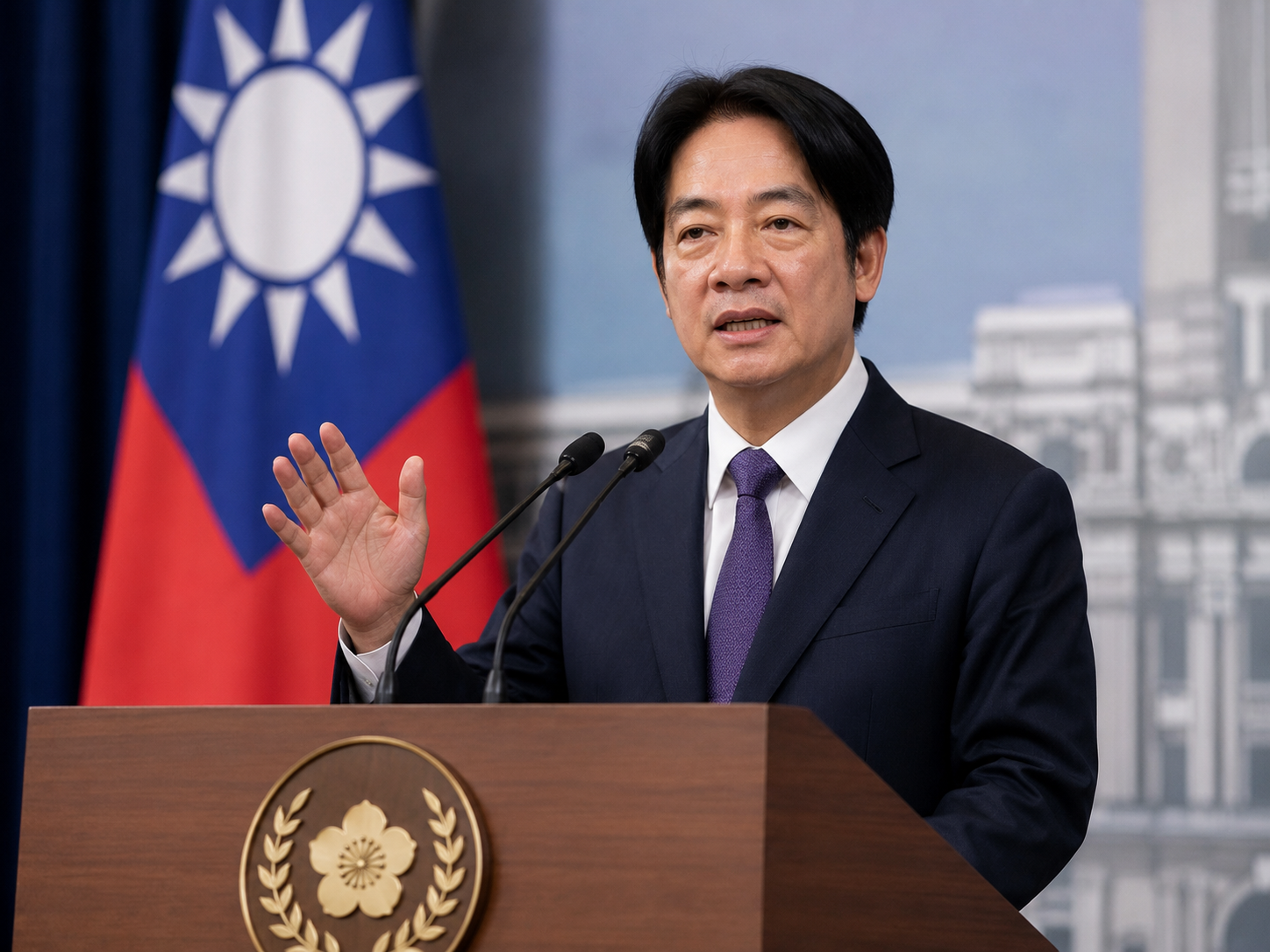
Taiwan’s President William Lai has issued a strong rebuke to China’s recently enacted Law on Promoting Ethnic Unity and Progress, asserting that Taiwan will not tolerate “red terror” or any efforts by Beijing to exert influence over the island. In a speech at the Democratic Progressive Party’s Central Executive Committee, Lai condemned the legislation as a further extension of China’s authoritarian practices with potential ramifications beyond its borders. He assured that Taiwan is committed to bolstering measures to protect its national interests and citizens from the increasing political pressure from Beijing.
The new law, which was passed by China’s National People’s Congress in March and came into effect this week, mandates Chinese citizens to support national unification and permits authorities to hold individuals or organizations accountable for actions deemed detrimental to ethnic unity or supportive of division. However, the law does not clearly delineate what constitutes such offenses. Critics in Taiwan have expressed concerns that the legislation is an attempt to reinforce the notion that Taiwanese people are part of a greater Chinese national identity.
Lai cautioned that the law could be leveraged to justify cross-border enforcement and escalate pressure on individuals and organizations outside of mainland China. He highlighted that Beijing has already executed over 110 instances of cross-border pressure targeting Taiwan and warned about the possibility of such actions expanding. The law’s broad scope could also subject foreign governments, businesses, lawmakers, civil society groups, and private individuals to arbitrary measures, according to Lai.
In response to these challenges, the Taiwanese government intends to enhance monitoring systems, refine early warning mechanisms, and review additional policies to shield its citizens from external interference. Lai also announced initiatives to expand media literacy programs, improve civil servant training, and establish robust prevention and response strategies to counter what he described as Beijing’s intensifying cross-border repression campaign. Moreover, Taiwan plans to continue collaborating with democratic allies to elevate international awareness of human rights issues and to defend its sovereignty.
The Taiwanese Ministry of Foreign Affairs echoed the president’s concerns, characterizing the legislation as another attempt by Beijing to extend its legal reach beyond its borders, conflicting with international norms and human rights standards. The ministry criticized the law’s vague language, which they argue could foster self-censorship and create uncertainty for those fearing retribution. The legislation has faced criticism from several international entities, including the United States, Japan, the European Union, the United Nations, and Amnesty International, who have all voiced concerns about its implications for human rights, legal certainty, and freedom of expression.