
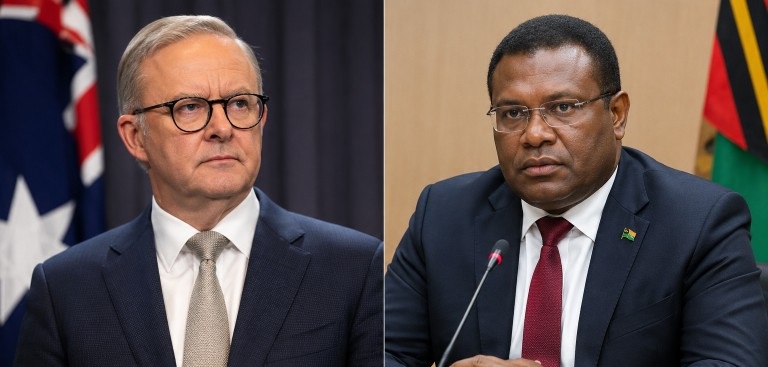
Australia and Vanuatu have formalized a significant security and development agreement, marking a new chapter in their bilateral relations. The Nakamal Agreement, as it’s called, seeks to enhance collaboration between the two nations, allowing Australia to be consulted on major third-party investments in Vanuatu’s critical infrastructure. This pact also solidifies Australia’s position as a primary security and policing ally for the island nation.
The agreement encountered delays due to Vanuatu’s concerns about potential restrictions on its ability to attract investments from other nations. However, assurances have been made that the pact respects Vanuatu’s sovereignty, explicitly stating that it does not permit foreign military bases or the militarisation of its infrastructure. This aspect was crucial for Vanuatu, allowing it to maintain its autonomy in economic decisions.
As part of its strategy to bolster influence in the Pacific, particularly amid rising competition with China, Australia has committed substantial funding towards the agreement over the coming decade. This financial commitment underscores Australia’s intent to deepen ties in a region where China’s presence has grown considerably through investments in infrastructure such as government buildings and transportation networks.
Despite this agreement with Australia, Vanuatu has expressed its intention to continue economic cooperation with China, emphasizing the importance of maintaining transparency in all its dealings. China remains a key partner for Vanuatu, contributing to various developmental projects across the nation.
The Nakamal Agreement is indicative of broader regional efforts by Australia to fortify its partnerships with Pacific Island countries. This move comes amid growing concerns over strategic competition and foreign influence in the region, as nations like Australia seek to reaffirm their roles as influential partners in Pacific affairs.