
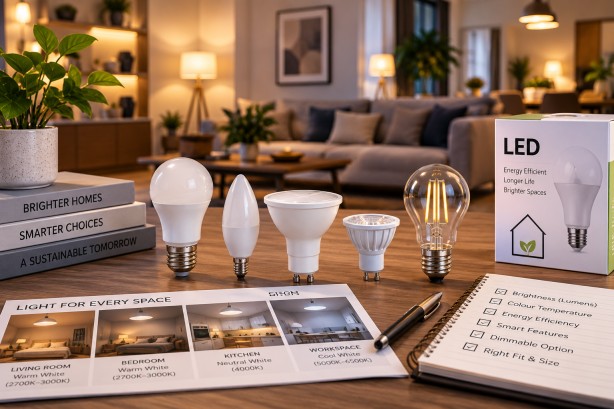
LED bulbs have become a staple in both residential and office settings due to their energy efficiency and long lifespan. As the market continues to expand, consumers now face a wider array of options in terms of brightness, color temperature, shape, and additional features like connectivity. However, selecting the right LED bulb goes beyond just comparing prices or sticking to familiar brands; it involves understanding the specific lighting needs of the space and the intended purpose of the illumination.
When shopping for LED bulbs, it’s essential to focus on brightness, measured in lumens, rather than wattage, which was traditionally used as a rough brightness indicator for older types of bulbs. A lumen output between 800 and 1,000 is generally sufficient for many general lighting applications, though the ideal brightness will vary based on room size and whether the lighting is meant for ambient, task, or accent purposes. Additionally, ensuring compatibility with the fixture and adhering to its maximum wattage rating is crucial.
Another important consideration is the color temperature, measured in Kelvin (K), which affects whether the light appears warm or cool. Bulbs in the 2700K to 3000K range emit a warm, inviting glow that is well-suited for bedrooms and living areas. In contrast, cooler light in the 4000K to 5000K range is often better for kitchens, offices, and workspaces where clarity is needed. Combining different color temperatures in various areas of a home can also be beneficial; for instance, using warm light in living spaces and cooler light at a work desk.
Energy efficiency remains a key reason for the switch from incandescent bulbs to LEDs, as they use significantly less electricity and produce less heat. However, the actual savings depend on factors such as the bulb’s wattage, daily usage, electricity costs, and the type of lighting technology it replaces. Thus, consumers are advised to compare wattage and expected operating life rather than relying solely on broad claims of savings. The lifespan of LEDs, though typically longer than incandescent bulbs, can vary depending on heat management, electrical conditions, and product quality.
For those interested in advanced features, smart LED bulbs offer connectivity options like Wi-Fi and Bluetooth, enabling app control, scheduling, dimming, and voice commands. While these features can add convenience, they also tend to increase the cost, and might not be necessary for users who need basic lighting. Ultimately, the best LED bulb is one that matches the specific needs of each room. By evaluating technical specifications like lumen output, color temperature, and compatibility, consumers can find lighting solutions that deliver the required brightness, appearance, and efficiency without incurring unnecessary expenses.
Legal Disclaimer:
The information contained in this article has been provided by independent third-party contributors, clients, or content partners. We do not independently verify the accuracy, completeness, legality, ownership, licensing, or reliability of submitted content, including text, images, videos, trademarks, or other media materials. The submitting party is solely responsible for ensuring that all content, including images and media assets, complies with applicable copyright, trademark, licensing, and intellectual property laws. We disclaim liability for any unauthorized use of copyrighted or proprietary materials by third parties. If you believe that any content published on this platform infringes your intellectual property rights, kindly contact the author above for prompt review and resolution.