
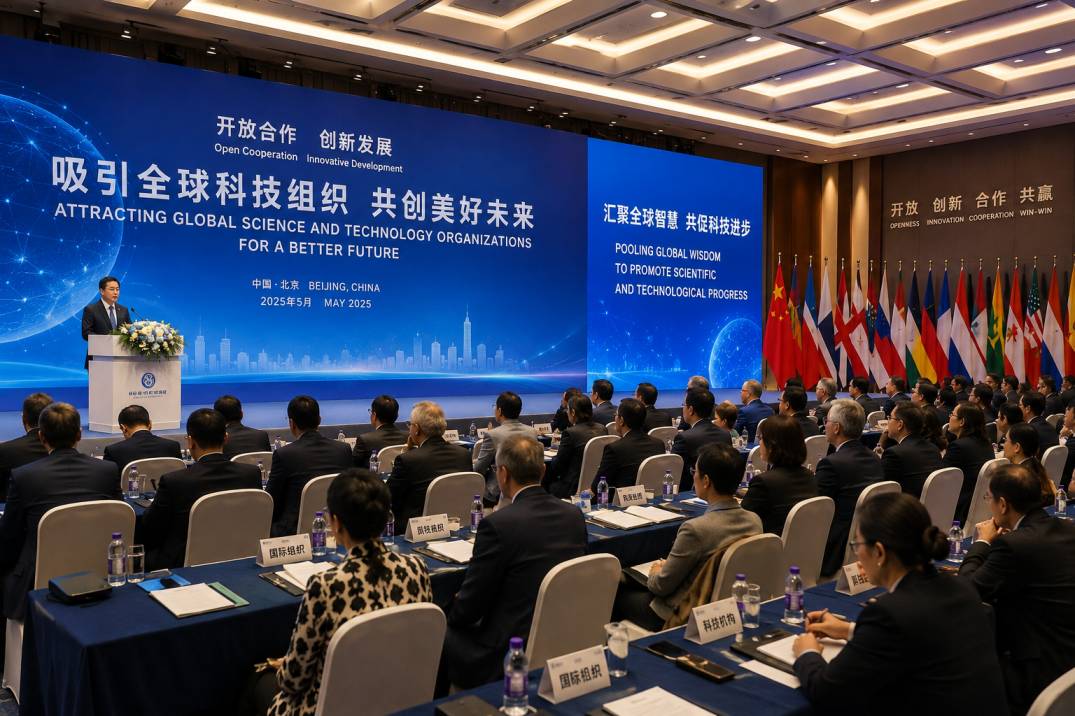
China is intensifying its strategy to become a global hub for scientific and technological collaboration by developing research centers and offering enhanced policy support to attract international organizations. The country is upgrading facilities to include service centers, exhibition areas, meeting rooms, and cross-border workspaces, aiming to invite more global scientific institutions to establish their presence.
In recent times, numerous international scientific organizations have chosen to set up their headquarters or permanent offices in various locations across China. These organizations span diverse fields such as aerospace, sensing technology, and environmental research. Experts highlight that China’s robust research infrastructure, coupled with its expansive industrial supply chains and vast scientific data resources, makes it a compelling choice for international partnerships.
To propel this initiative, China has rolled out several incentives at both national and regional levels. These measures include financial rewards and streamlined procedures for cross-border data access. Enhancements in internet connectivity and simplified entry protocols for international researchers are also part of China’s efforts to boost its appeal to global scientific communities.
Officials in China believe that these strategic moves will not only fortify global scientific cooperation but also foster a more inclusive approach to international science governance. By creating an inviting environment for scientific collaboration, China aims to position itself as a pivotal player in the global science and technology landscape.